How to Teach Your Child the Nepali Alphabet (Ka, Kha, Ga) at Home—The Fun Way!
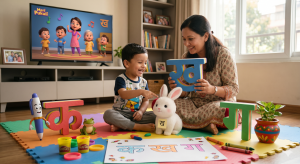
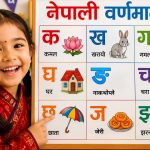
Every parent wants their child to stay connected to their roots, and learning the Nepali language is one of the most beautiful ways to do that. But let’s be honest: sitting a toddler down with a textbook to memorize “क, ख, ग” (Ka, Kha, Ga) usually ends in frustration for both of you!
Toddlers and preschoolers learn best when they are playing, singing, and having fun. If you want to introduce the Nepali Barnamala (alphabet) to your little one, you have to speak their language first: the language of play.
Here are four fun, stress-free ways to teach your child the Nepali alphabet at home.
1. Sing the Alphabet (Music is Magic!)
Children have an incredible memory for melodies. Think about how quickly they pick up the lyrics to their favorite nursery rhymes! Instead of just repeating the letters, turn the Nepali alphabet into a song.
Find catchy, upbeat Nepali educational songs with a good rhythm (a little slap-bass or funk element always gets kids dancing!). When they associate “Ka, Kha, Ga” with dancing and a great beat, they will start singing the letters around the house without even realizing they are studying.
2. Use High-Quality Visuals and Characters
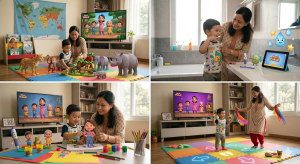
Kids are highly visual learners. They are drawn to bright colors, big expressive eyes, and cute characters.
Instead of plain black-and-white flashcards, show them high-quality, 3D animated videos where friendly, Pixar-style Nepali characters teach the letters. Seeing a cute animated toddler on screen saying “Ka bata Bhyaguta” (Frog) makes the concept instantly relatable. When children see characters that look like them and speak their language, the learning process becomes much more engaging.
3. The “Touch and Find” Game
Turn your living room into a Nepali vocabulary treasure hunt. Write a few Nepali letters on sticky notes and place them on corresponding items around the house.
-
Put क (Ka) on a Kalam (Pen).
-
Put ख (Kha) on a toy Kharayo (Rabbit).
-
Put ग (Ga) on a Gamala (Flower pot).
Walk around with your child and ask them to “Find the Ka!” When they find it, celebrate big! This physical activity helps lock the letters into their memory much faster than sitting at a desk.
4. Arts, Crafts, and Playdough
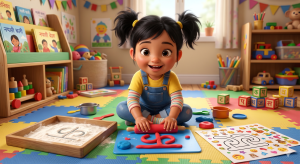
If your child loves getting their hands messy, use that to your advantage. Print out large, bubble-letter versions of the Nepali alphabet. Instead of just coloring them in, have your child:
-
Fill the letters with colorful stickers.
-
Roll out playdough to form the shapes of “Ka” and “Kha”.
-
Trace the letters in a shallow tray filled with salt or flour.
Tactile learning builds strong connections in a child’s developing brain, making the shapes of the unique Nepali script easier to remember.
Make it a Daily Habit
You don’t need to spend hours teaching. Just 10 to 15 minutes a day of singing a Nepali rhyme, watching a bright, beautifully animated educational video, or playing a quick matching game is enough to build a strong foundation.
Want to make learning even easier? Check out our latest 3D animated nursery rhymes and educational videos right here at Meri Pukuli. We combine crystal-clear animation with catchy, original music to make learning Nepali an absolute joy for your little ones!
Keep It Fun and Consistent!
Teaching your child the Nepali alphabet doesn’t have to feel like a chore for either of you. By replacing pressure with play, and rote memorization with catchy music and tactile games, your little one will be happily recognizing “क, ख, ग” before you know it! Remember, the goal at this age isn’t perfection—it’s about building a joyful connection to the Nepali language and culture.
At Meri Pukuli, we believe that high-quality, engaging content is the secret to early childhood learning. That’s why we pour our hearts into creating cute, Pixar-style 3D animations and upbeat music that kids actually want to watch and sing along to.
Which of these fun methods are you going to try first with your toddler? Let us know in the comments below! And don’t forget to join our growing family of parents by heading over to our YouTube channel. Subscribe and turn on notifications so you never miss our latest educational rhymes and stories!